
You come across a 1,000 thread count sheet and disregard it as a marketing ploy. But did you accidentally decide that multi-ply yarn is a hoax too?
We all know that an inflated thread count is a big “avoid-at-all-costs” warning sign. But let’s put it aside for a second and look at how we got here.
First, the basics:
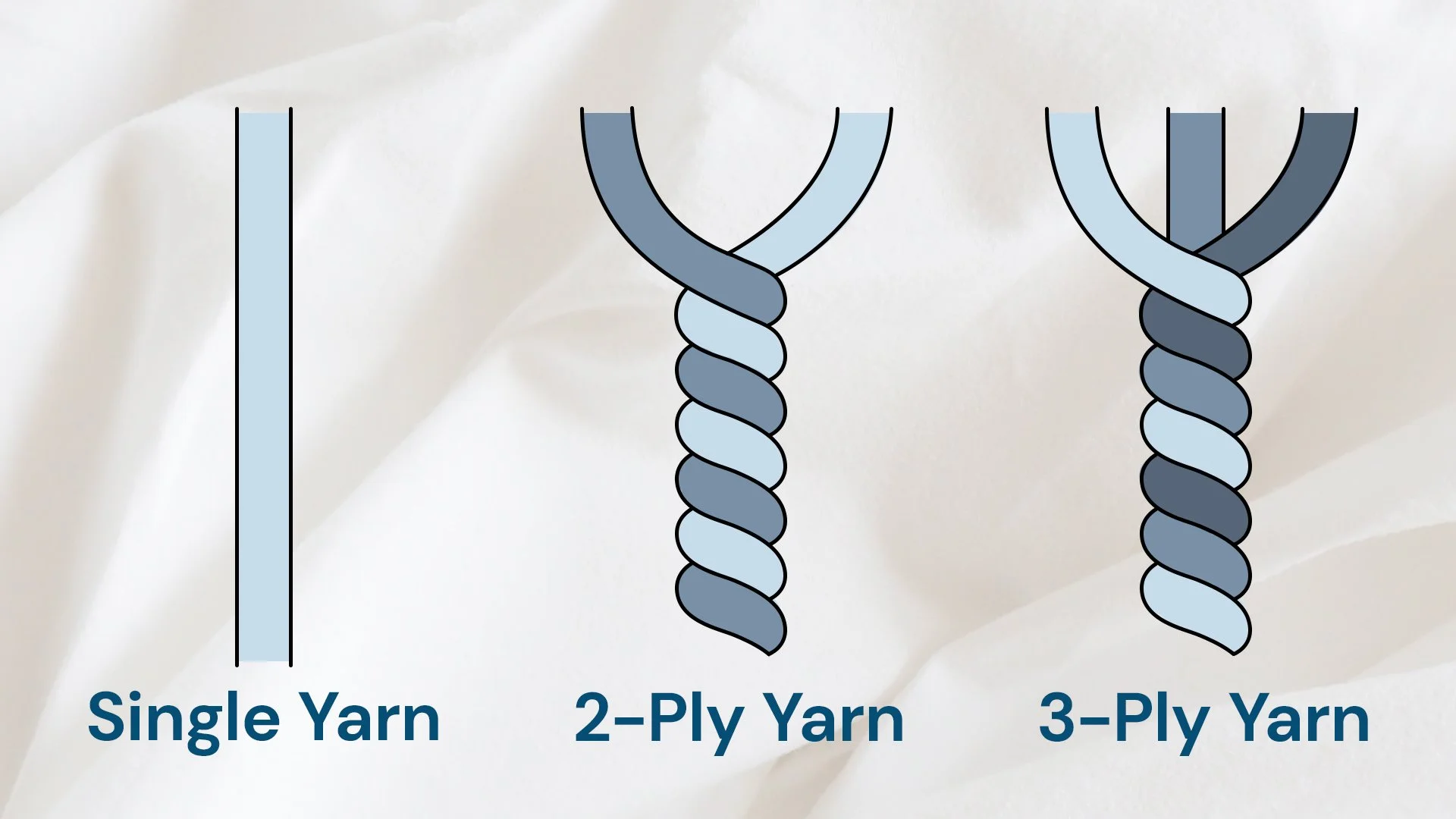
A single-ply yarn is a type of yarn made from a single strand of spun fibers held together by a twist in one direction.
Two or more single yarns can be twisted together to create a plied yarn (usually twisted in the opposite direction in which the single yarn was created). This method is used to create yarn that is stronger, more uniform, and has less torque.
The problem began when some sellers took these multi-ply fabrics and inflated their thread count so they would look like premium products. Instead of counting a plied yarn as a single strand, they counted each ply toward the total thread count, falsely advertising their products as having a 600, 800, or 1,000 thread count. Customers think they are buying a premium sheet when in reality they may be buying a textile made of lower-grade short-staple fiber that doesn’t meet the performance standards you’d expect from high-quality bedding.
So multi-ply yarn may have gotten a bad rap due to misleading advertising, but it’s important to remember that it exists for a reason and can be superior to a single-ply construction in some cases, especially when extra tensile strength and structural stability are needed. Sewing threads, ropes, automotive upholstery, carpets, military apparel, and even some bedding, are all examples where that extra strength can be beneficial.
So let’s give multi-ply yarn some grace. And anyway, determining a fabric’s quality goes beyond a single factor; yarn quality, weave type, GSM, finishing, and performance requirements should all be considered as well.