
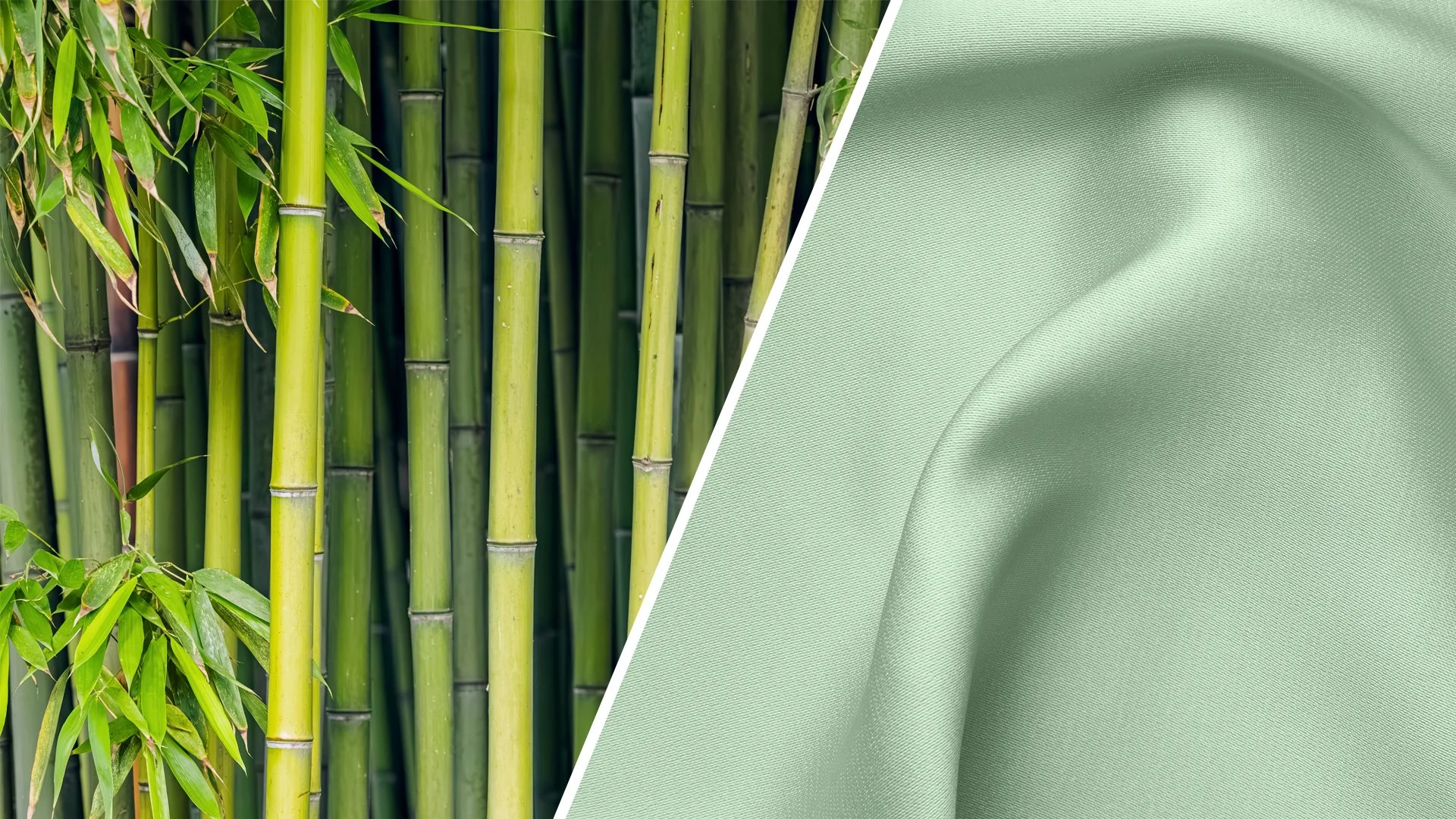
Bamboo textiles are environmentally friendly... right? Well, it really depends on HOW bamboo is being processed into fiber.
Bamboo‘s characteristics make it an ideal material for eco-friendly textiles- it grows fast, doesn’t need replanting, requires minimal water and no pesticides, is more efficient than trees in capturing carbon dioxide and releasing oxygen, and is biodegradable.
Turning bamboo into a soft textile fiber requires either a mechanical or a chemical process- two methods that have very different environmental impacts.
In chemical process, the bamboo is broken down into cellulose and regenerated into a fiber called rayon. Viscose is the most common type of rayon, produced using chemicals such as sodium hydroxide and carbon disulfide. These chemicals can become toxic waste, posing risks to workers and the environment.
Lyocell is another chemically processed bamboo, but it uses a different solvent and is typically manufactured in a closed-loop system that recovers and reuses almost all the solvent, greatly reducing emissions and waste.
Mechanical processing produces a coarse natural bamboo fiber, sometimes marketed as bamboo linen. It is chemical-free and is less harmful to the environment; however, it requires higher energy use, is labor-intensive, and costly, making it much less common.
When buying textiles made from bamboo, read the fiber label carefully. Under FTC rules, products made using the rayon process should be identified as rayon made from bamboo, viscose made from bamboo, or lyocell made from bamboo, rather than simply "bamboo." Products made from mechanically processed bamboo fiber may be labeled as bamboo or bamboo linen. In addition, look for certifications that verify different aspects of sustainability such as OEKO TEX Standard 100, GOTS, or FSC.
Myth: If it's Made from Bamboo, it's Sustainable
Previous
Previous
Understanding Textile Certifications: What Do They Really Tell You?
Next
Next